Playing with Fear: Art Exploring the Research on “Scary Fun” Haunted Attractions
Every Halloween, I let myself get creative-curious about the macabre. I do a little dive into the research of spooky: exploring what research has been published on the topics of spooky, scary, and dark. This year, I didn’t find much fresh publishing on the topic, so I picked a 2020 article in Psychological Science called Playing With Fear: A Field Study in Recreational Horror.
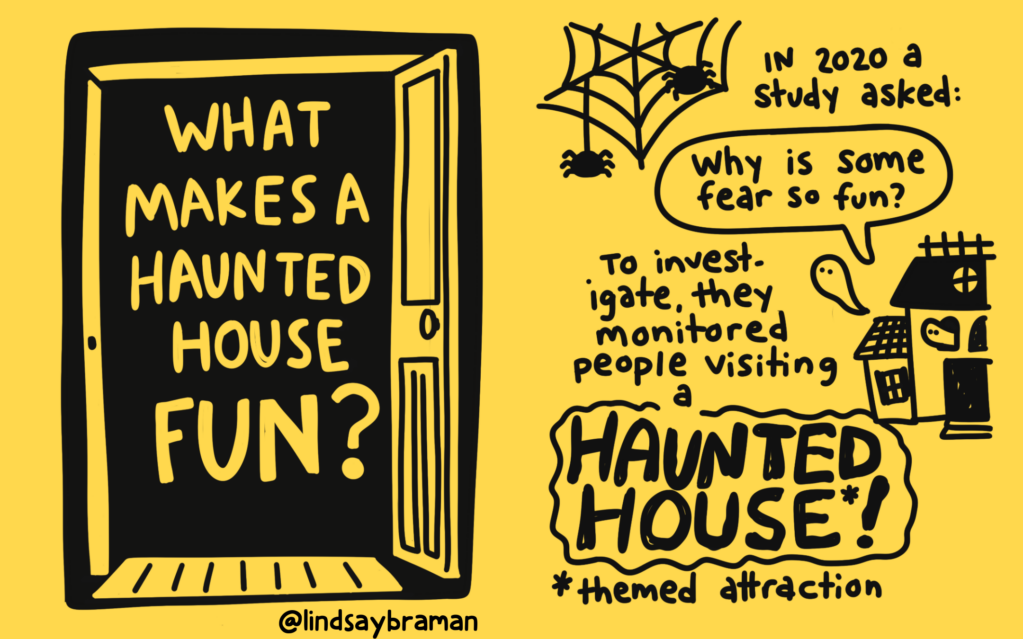
I love Halloween. As someone who loves play and also serious topics like existential therapy, I think Halloween is an important ritual that gives us Americans a rare chance to explore themes we usually avoid: like death and the afterlife. Under the guise of holiday-themed play, I think culturally we might be doing something deeper – and I love it.
But I’m also intrigued –
What is it that makes us choose to be scared? And why is the right amount of scary different for each person?
That question sent me back to the research again this year. In a field study at a haunted-house attraction, researchers followed 110 visitors and found that enjoyment tended to rise with some fear, then drop when fear became too intense – and a person’s “just right” level of fear varied. 1
In the right setting, fear can be intertwined with play – which might just be part of the reason Americans are so enamored by Halloween.
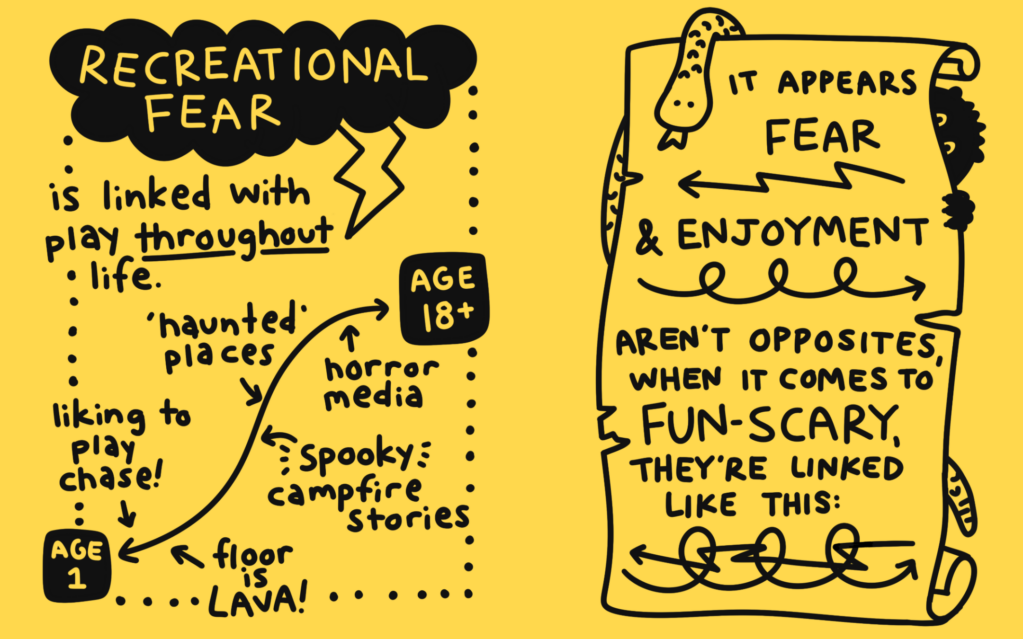
The experience was most enjoyable when the scariness felt “just right.” It’s a useful reminder that fear and fun aren’t opposites.
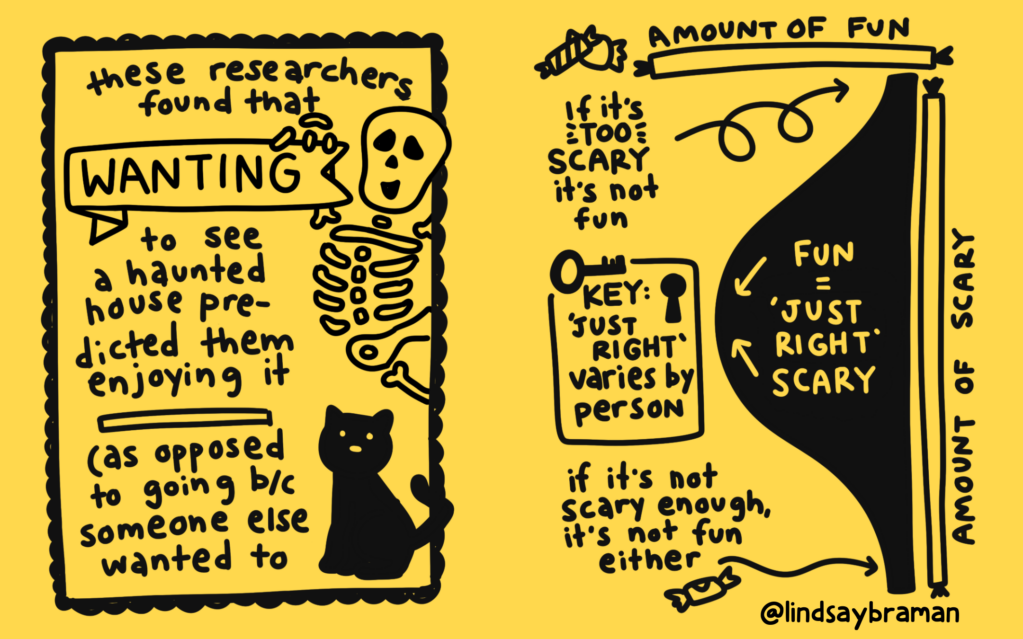
I made this illustration in one sitting at my favorite cafe in one of St. Louis’s oldest neighborhoods. My cafe goes all out for Halloween, as you can see in this photo. It felt like exactly the right place to sit with a question about haunted houses and the delight in being a little scared.
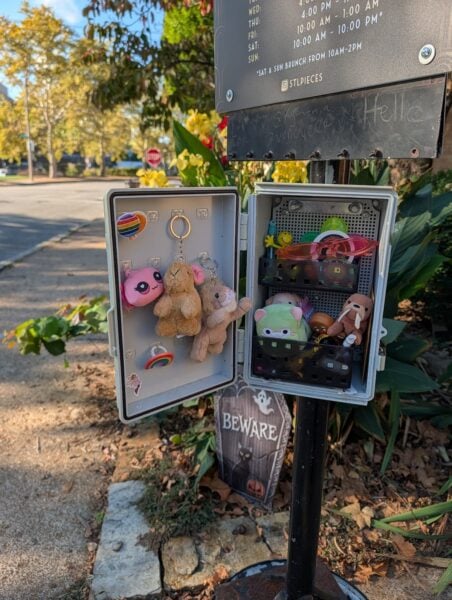
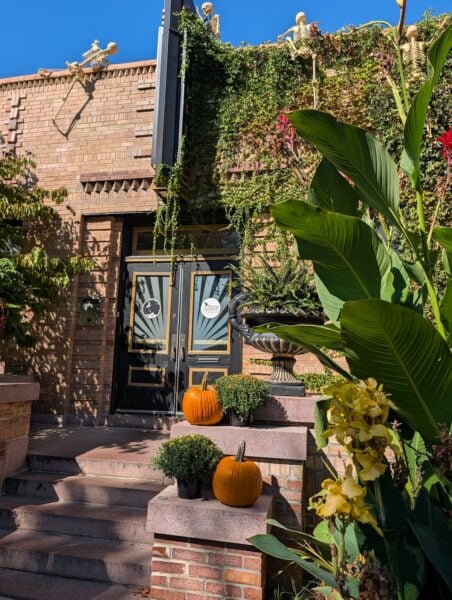
The café also has a trinket library, which I’ve more or less adopted as a patron. Usually, when I hit this café (sometimes with my dog Barry!), I bring a clear backpack full of trinkets. I leave some bits and bobbles for other people to find, and sometimes I take something home. On the day I made this drawing, I put a 1950s ventriloquist manual in the library. 🙂 I love sharing an unexpected trinket!
I finished this “Playing with Fear” art in a hotel lobby in St. Louis, which was converted from an old sports club downtown. I guess I’m drawn to old spaces: I love a good patina, a story, and remembering that spaces – like me- hold stories.
This digital download features an 8.5×11 printable doodle-style visual that makes research about fear and fun approachable and easy to share!
- APA 7: Andersen, M. M., Schjoedt, U., Price, H., Rosas, F. E., Scrivner, C., & Clasen, M. (2020). Playing with fear: A field study in recreational horror. Psychological Science, 31(12), 1497–1510. https://doi.org/10.1177/0956797620972116 [↩]