Telling the Story of Disenfranchised Grief
Grief is a deeply personal experience, yet not all grief is acknowledged, supported, or even “allowed,” culturally-speaking. Disenfranchised grief – a term coined by Dr. Kenneth J. Doka – describes this experience of grief. Whether as a response to death or to other forms of loss, some experiences of grief go unrecognized by society, leaving those who experience it feeling isolated and unsupported.
My new sketchnote explores this type of grief. Inspired by Unspoken Pain: Witnessing the Silent Wounds of Disenfranchised Grief by Dr. Renee Turner, PhD, LPC-S, RPT-S™, this visual illustration shows how losses—whether from death, non-death experiences, or complicated relationships—are shaped by social expectations, stigma, and the ways bodies respond to grief. Understanding disenfranchised grief is essential because recognizing it is the first step toward processing and healing.
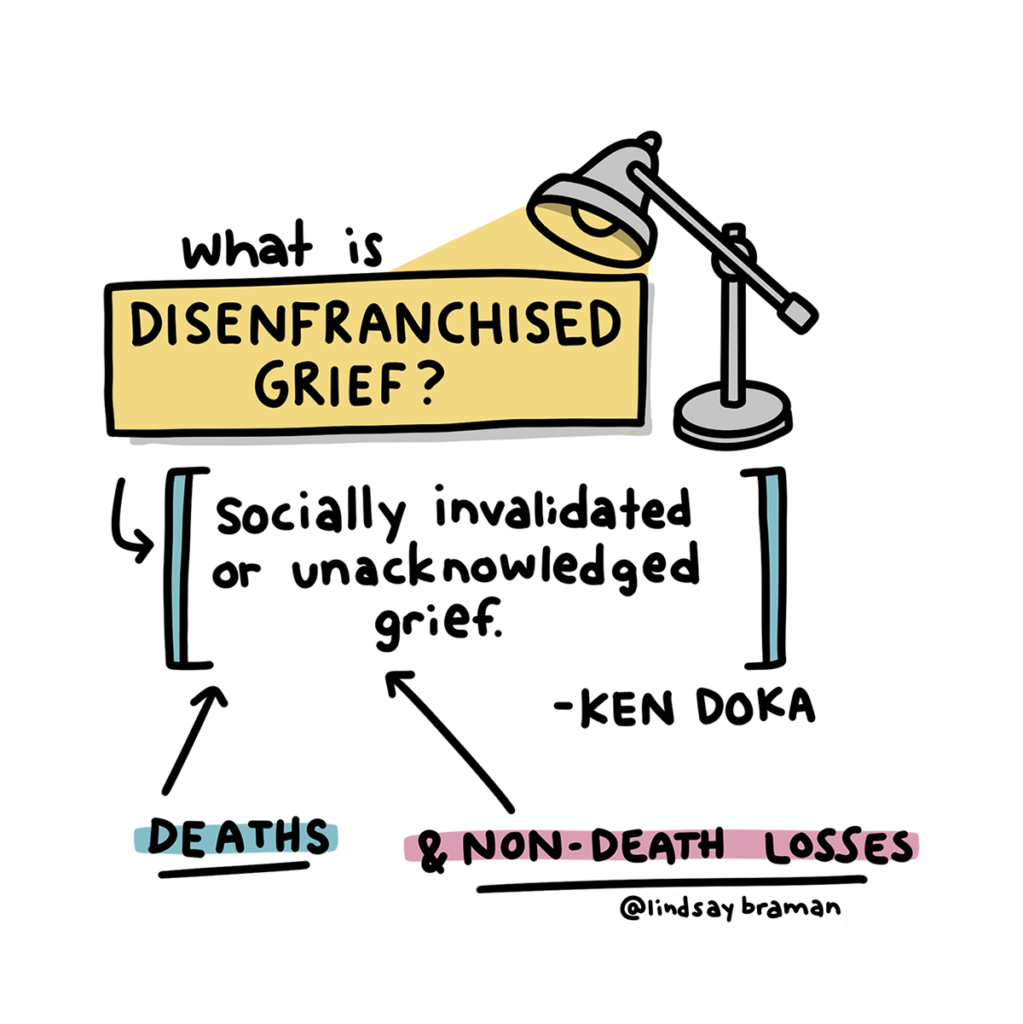
What Is Disenfranchised Grief?
Disenfranchised grief happens when loss is socially invalidated, unacknowledged, or minimized. It is grief that does not fit within the traditional framework of what society considers a “legitimate” loss. This can happen when we experience a loss that others don’t think matters. It can also happen when we are denied the opportunity to grieve because others don’t think the loss “counts”.
This download includes the sketchnote as a one-page PDF resource.
You can also access this resource for FREE by joining my Patreon as a free member!
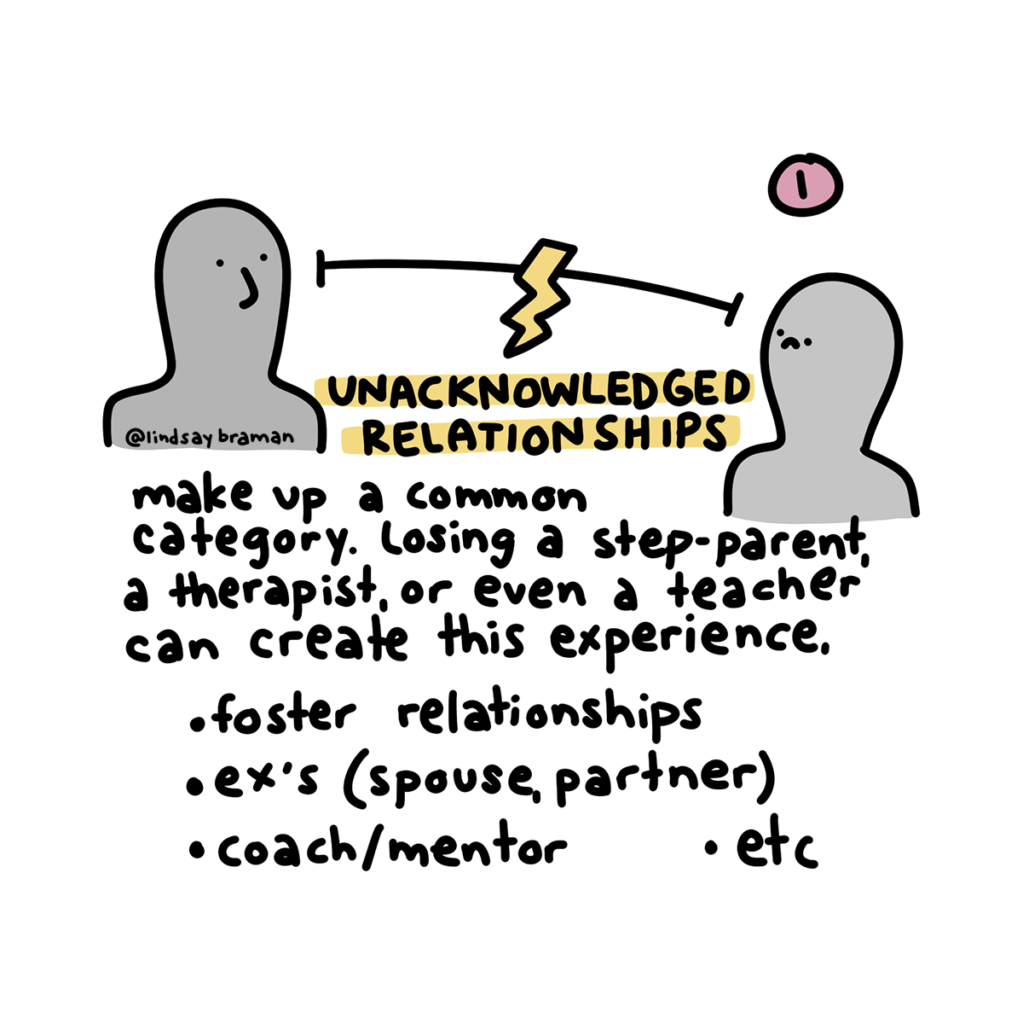
When We’re Grieving Unacknowledged Relationships
One common reason grief becomes disenfranchised is when culture doesn’t recognize the relationship that was lost
Examples of this include:
- When society at large doesn’t value the person in the same way as others:
- incarcerated people,
- people with substance use disorders,
- etc.
- When society stigmatizes the cause of death/loss:
- AIDs in the 1980’s,
- people who die due to rejecting medical science,
- people who die by suicide.
- etc
- When society doesn’t value the relationship type:
- chosen-family member,
- an ex-partner,
- a stepchild,
- loss of a therapist, teacher, or mentor who was important to us.
When our losses are unacknowledged, we might feel like our grief is not valid or that we do not have the right to mourn. That is disenfranchised grief.
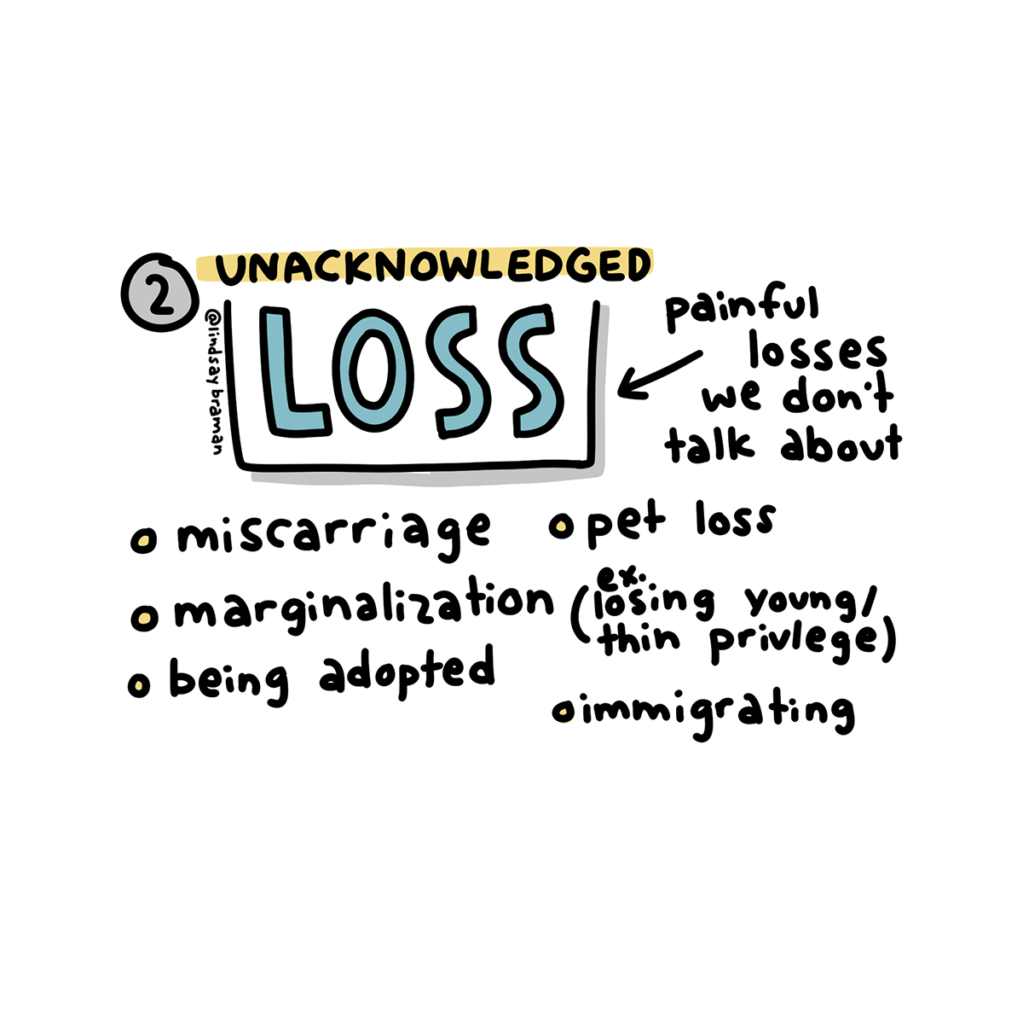
Unacknowledged Loss
Not all grief is tied to death. Many losses can carry deep grief, but because they do not fit traditional definitions of bereavement, they are often dismissed.
Some examples of unacknowledged loss include:
- Miscarriage or infertility struggles.
- Job loss, retirement, or a career-ending injury.
- Marginalization, displacement, or losing a sense of belonging.
- Losing a pet, (often minimized despite being deeply painful and incredibly common)
- Adoption-related grief, including birth parents grieving placement or adoptees grieving the loss of biological family connections.
When these losses are overlooked, the person experiencing them may feel isolated in their grief or struggle to find support.
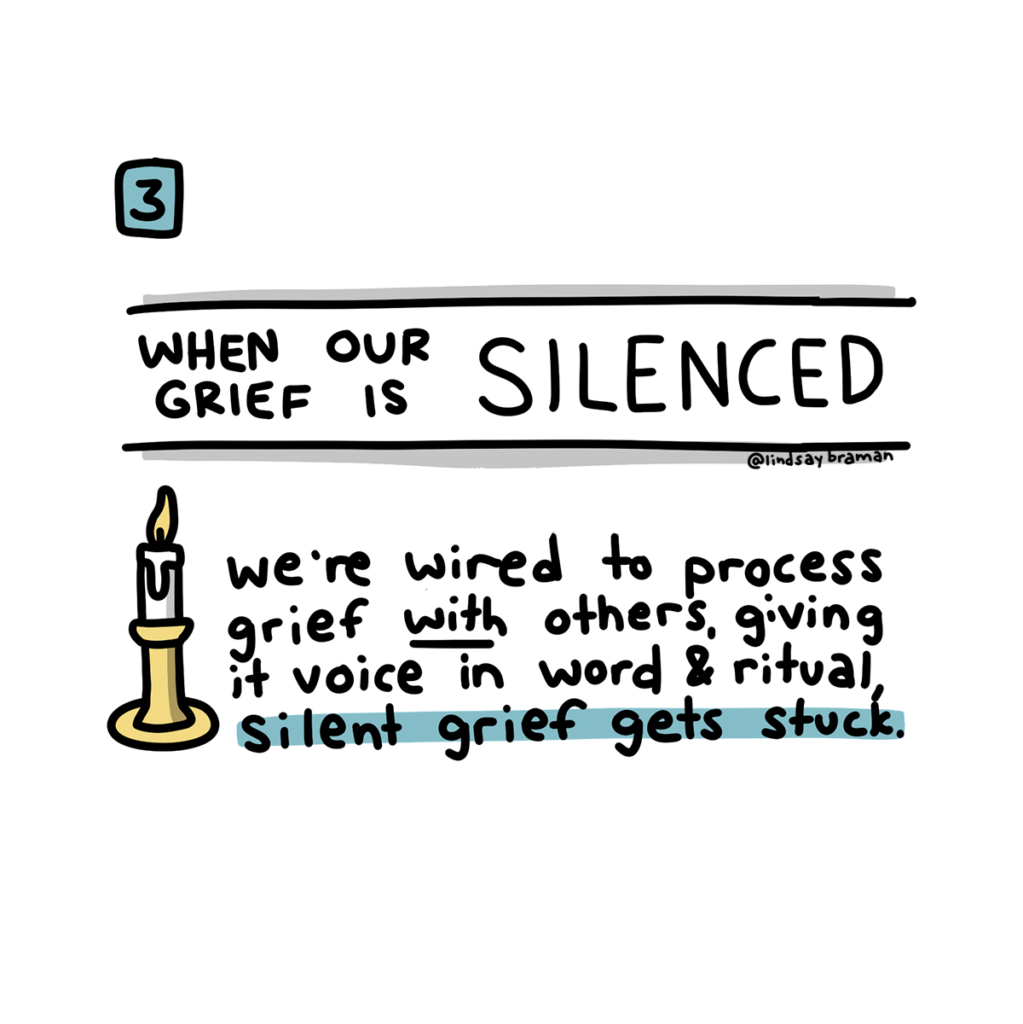
When Our Grief Is Silenced
Grief can be silenced when people feel unable to express their emotions because their loss is seen as insignificant, burdensome, or inappropriate.
This can happen when:
- People around the griever minimize or dismiss their pain. Sometimes silently or through cultural pressure, but often with phrases like “You should be over it by now.”
- The griever is expected to stay strong for others, leaving no space for their own mourning.
- The loss is too complicated to talk about openly, such as grieving an estranged family member.
When grief is silenced, it does not disappear. Instead, it may become internalized, leading to feelings of shame or unresolved emotional distress.
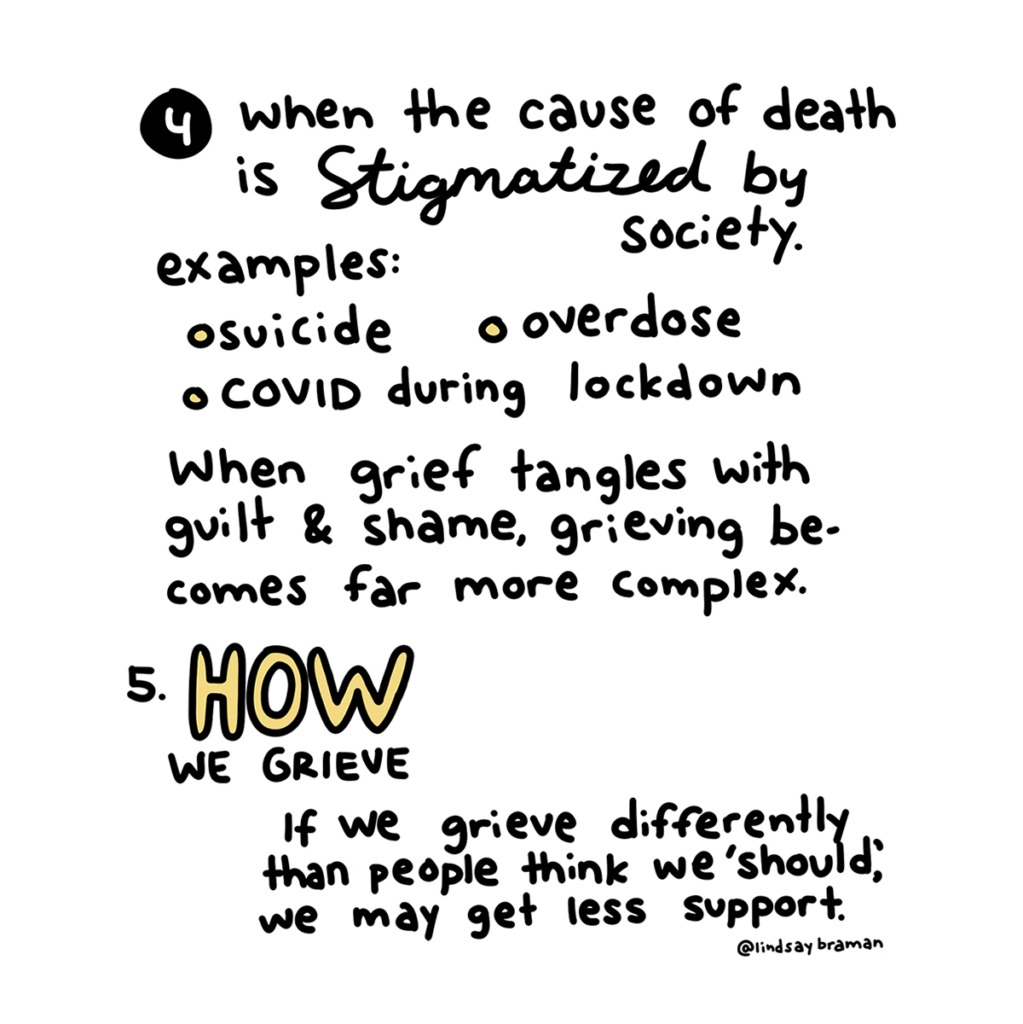
When Grief Is Stigmatized / How We Grieve
Some types of loss carry stigma. Stigma makes it difficult for those grieving to receive the support they need. Losses related to addiction, suicide, incarceration, or controversial social issues may be met with judgment rather than compassion.
Additionally, the way we grieve is influenced by social expectations. People who grieve differently than “normal” (grieving privately, or not showing the “right” emotions at the right time)— may get less support. Without validation, these people may begin to question whether their grief is justified.
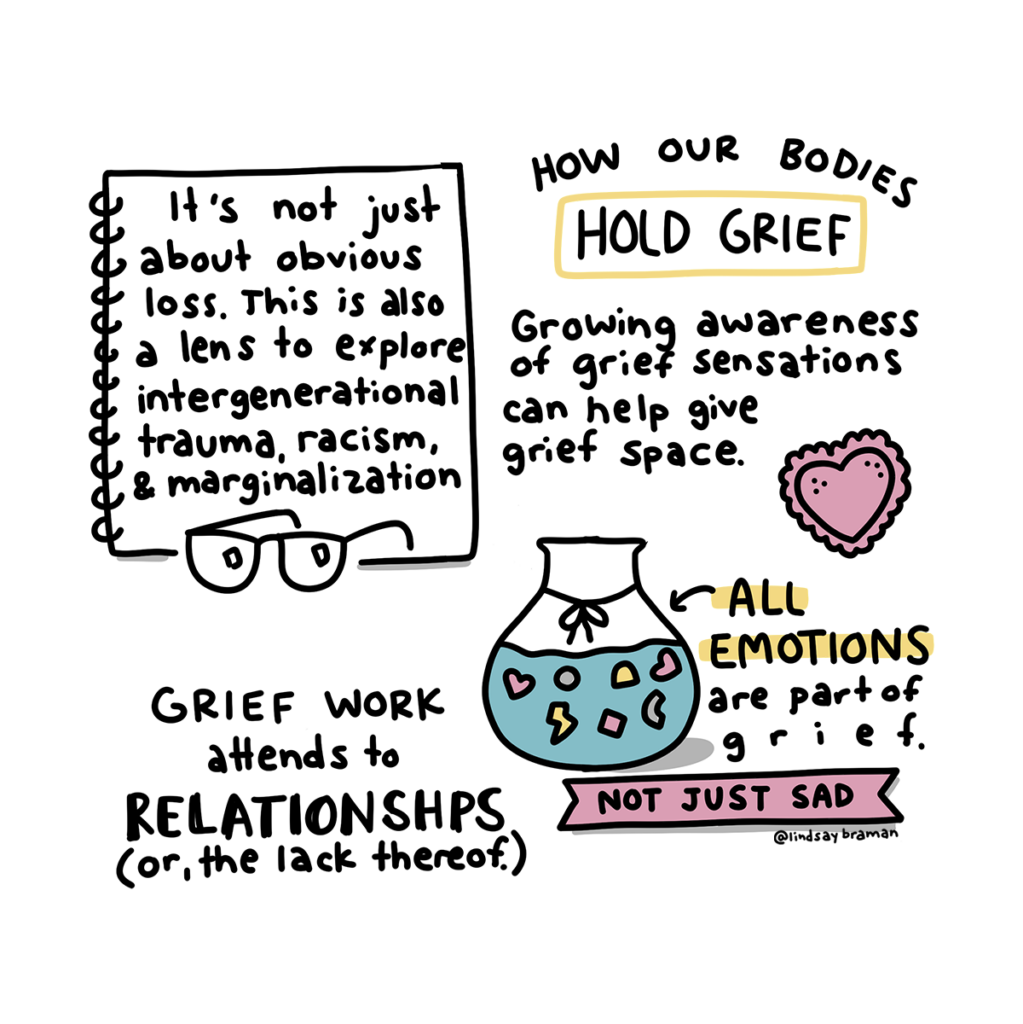
How the Body Holds Grief
Grief is not just an emotional experience—it also has physical and neurological effects. Studies have shown that grief can impact brain function, making it harder to focus, remember things, or regulate emotions 1. This is why many people experiencing grief report feeling mentally foggy or detached from their surroundings.
Grief can also manifest physically. Symptoms such as fatigue, tension, headaches, and digestive issues are common among people who are grieving. The stress that comes with loss can weaken the immune system, making individuals more vulnerable to illness.
Intergenerational patterns also influence disenfranchised grief. Similar to how intergenerational trauma may carry through generations, families and communities that have historically suppressed grief due to cultural or societal pressures may pass down patterns of unprocessed grief. This can affect the way future generations understand and experience loss, making it more difficult to express and validate their emotions.
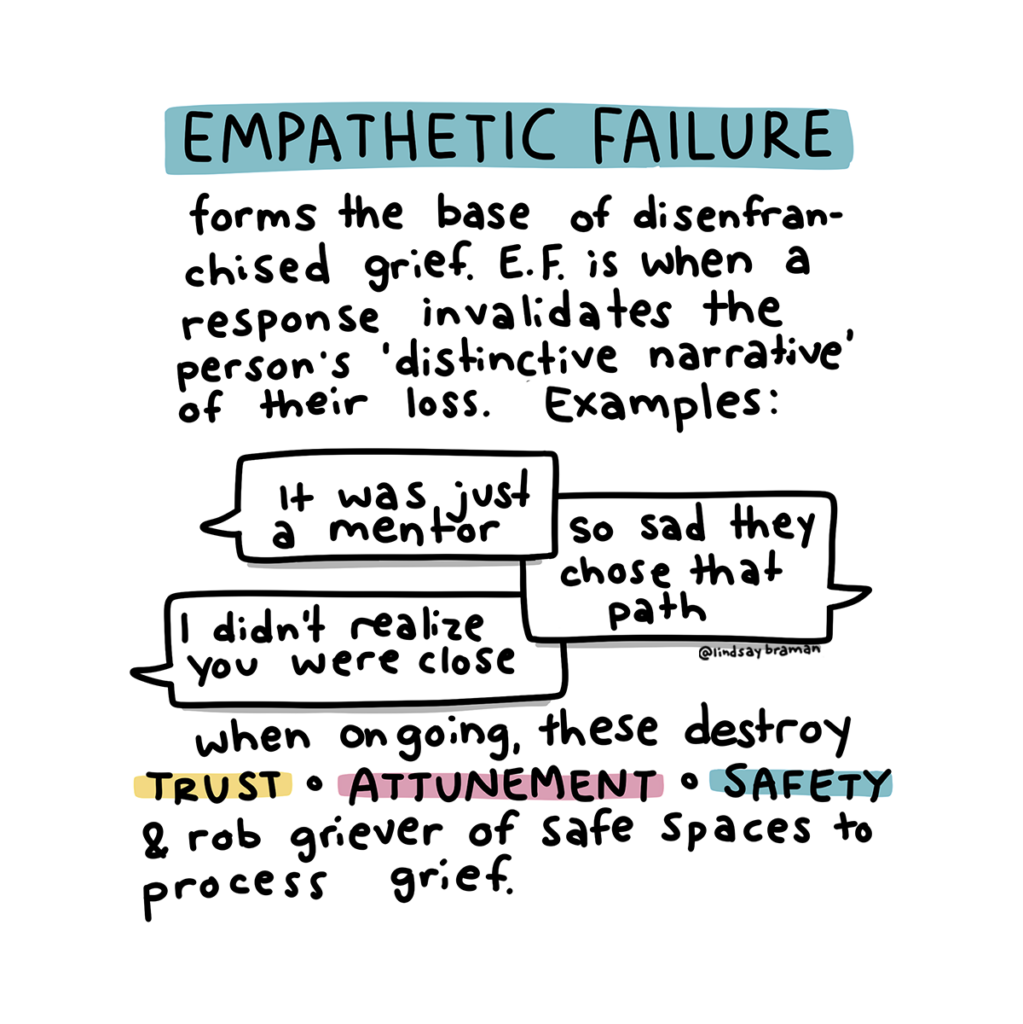
Empathetic Failure
At the core of disenfranchised grief is what experts call “empathetic failure”- basically: when the people around us fail to respond to our pain in a way that feels supportive.
Some examples of empathetic failure might include:
- A friend dismissing grief because they cannot relate to the loss.
- A community lacking structures to support certain types of grief.
- Institutions that prioritize productivity over emotional well-being, forcing people to move on too quickly after a community experiences a loss.
Empathy plays a crucial role in healing. When people are met with care and understanding, grief becomes more bearable. This is why good support is so crucial.
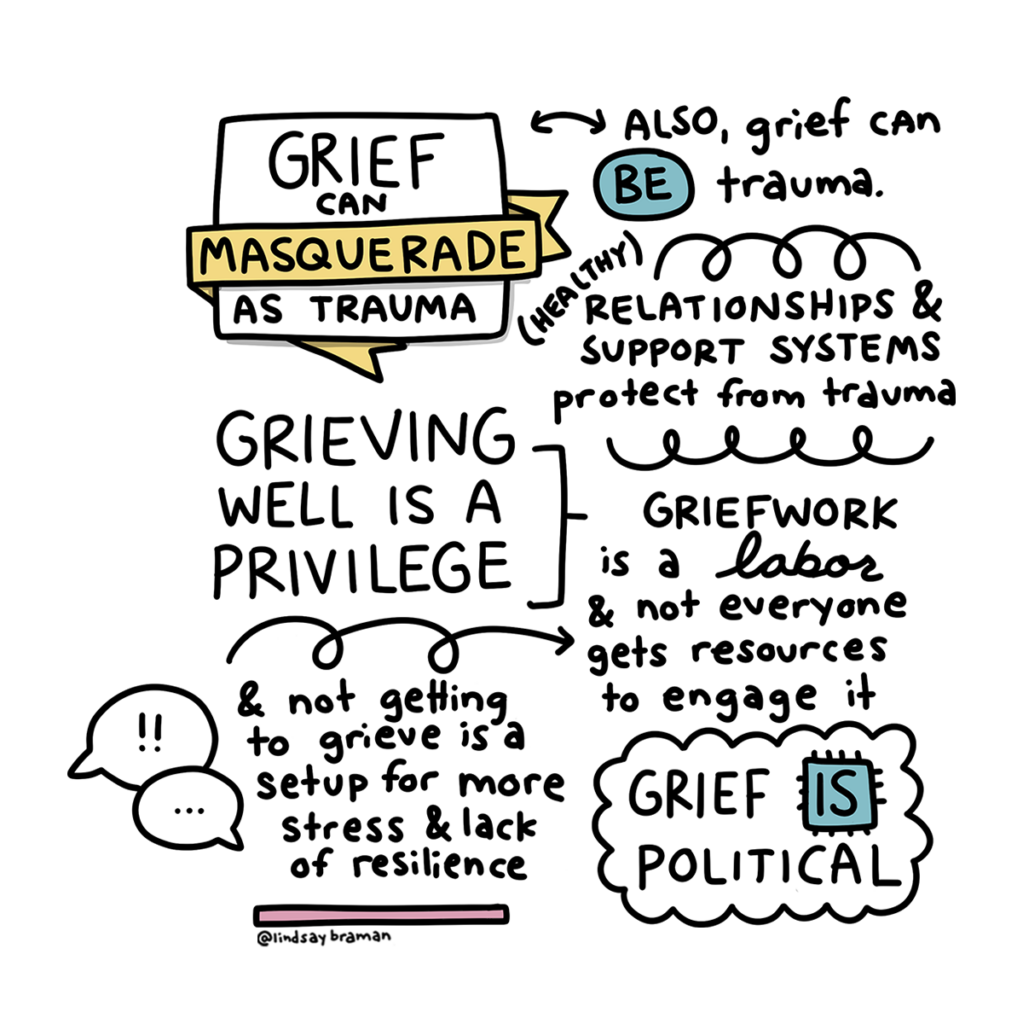
The Privilege of Grieving Well
Not everyone has the same permission to grieve openly. In societies where grief is stigmatized, it can be harder to grieve well. Grieving well – meaning, in a way that allows for emotional expression, community support, and validation- is a privilege that not everyone has access to.
If someone’s grief does not fit societal expectations, such as crying openly, seeking therapy, or engaging in funeral-type rituals, they may not receive the validation or comfort they need. Awareness and commitment to honor all types of grief in our communities can shift this narrative.
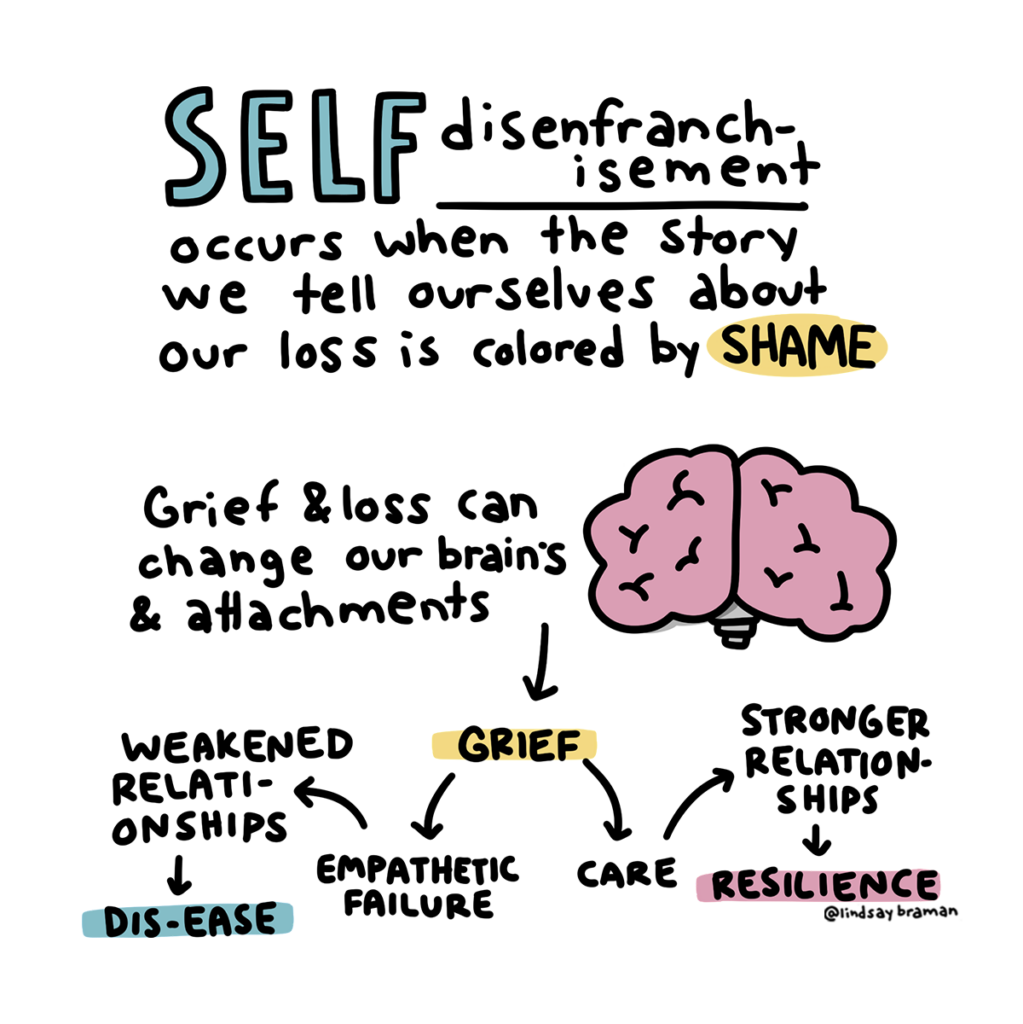
Self-Disenfranchisement
Sometimes, people do not need others to silence their grief- they do it to themselves. Self-disenfranchisement happens when we internalize the idea that our loss is not valid or important.
This might look like:
- Telling ourselves to “move on” before we are ready.
- Feeling guilty for still being sad about something others see as minor.
- Downplaying our grief because “others have it worse.”
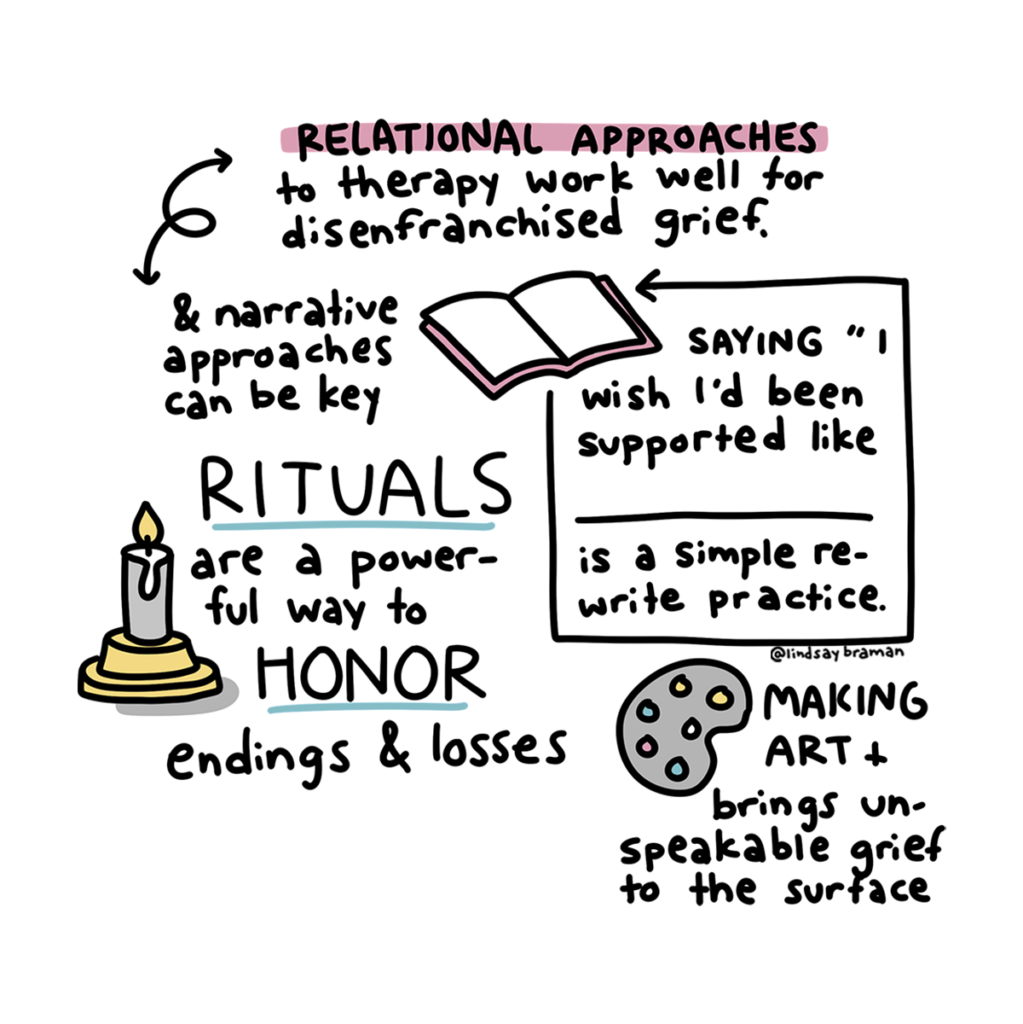
Finding Healing Through Ritual and Relational Support
While grief is painful, creating rituals to honor loss can be a powerful way to find healing. Rituals do not have to be elaborate. Simple acts such as journaling, lighting a candle, or setting aside a specific time to remember a loss can serve as meaningful ways to validate grief.
Relational support matters too. Grief is often processed best in community, where individuals can share their experiences and feel seen. Finding spaces where grief is honored- whether through support groups, therapy, or personal support systems- can help individuals navigate the complex emotions related to grief.
TL;DR
Grief, in all its forms, deserves recognition and support. Disenfranchised grief can leave people feeling alone, misunderstood, or even ashamed of their pain. By recognizing and naming this type of grief, we can begin to create more inclusive spaces for all forms of loss, and help community members grieve well. No matter the cause, grief is real, and it deserves to be acknowledged and supported.
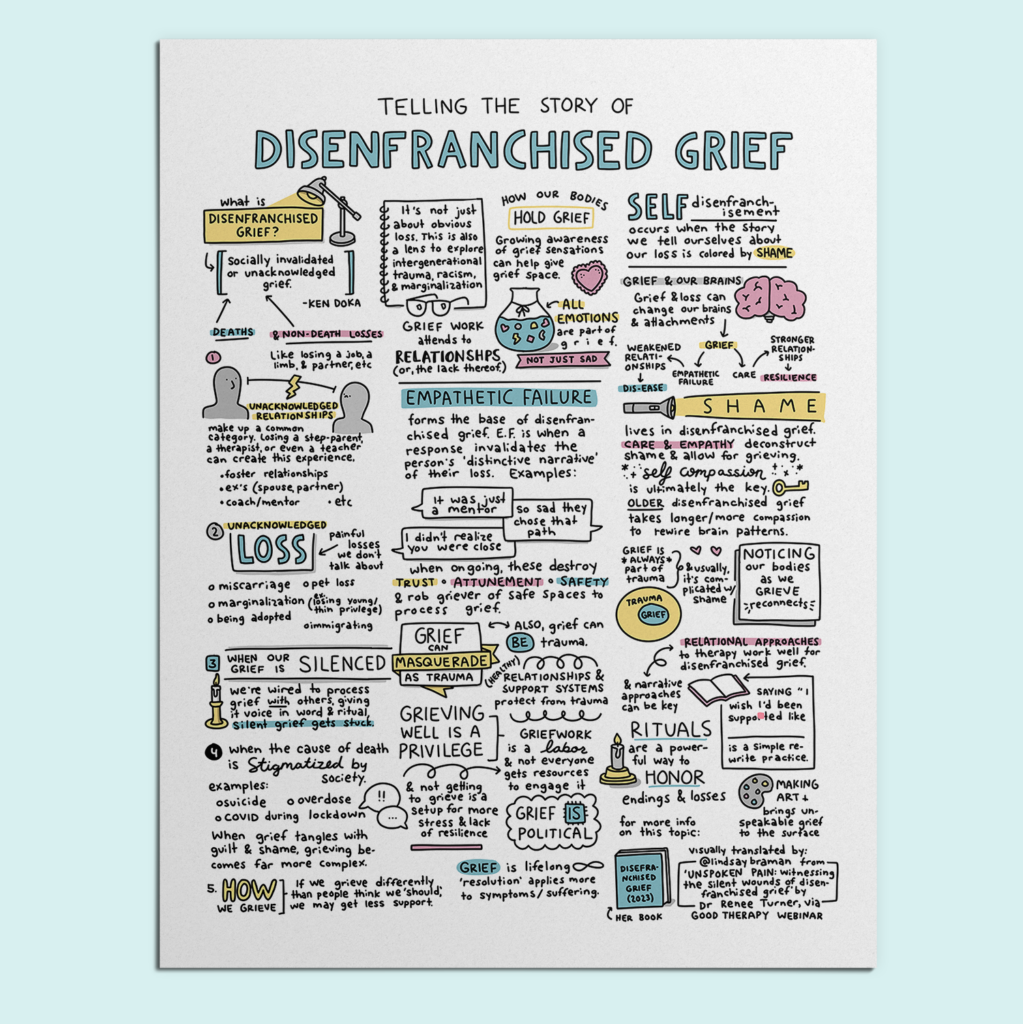
Image Description:
This sketchnote, titled “Telling the Story of Disenfranchised Grief,” visually explores grief that is socially unacknowledged or invalidated. The title is in bold blue and black text, followed by a yellow box defining disenfranchised grief, quoting Ken Doka. The layout is structured with hand-drawn text, arrows, and small illustrations, including a brain, candles, speech bubbles, and grieving figures, to illustrate key concepts.
The sketchnote highlights non-death losses (e.g., losing a job or an unrecognized relationship) and unacknowledged grief (e.g., miscarriage, marginalization, or being adopted). A brain illustration represents how grief is stored in the body, showing that it’s not just sadness but a mix of emotions. Empathic failure is depicted through dismissive statements like “I didn’t realize you two were that close,” showing how invalidation deepens grief. The concept of grief masquerading as trauma is introduced, emphasizing how unprocessed grief can appear as other struggles.
A section on silenced grief includes drawings of people with their mouths covered, illustrating how stigma—such as grief from overdose or COVID-19 deaths—can suppress mourning. Shame is written in a bold yellow box, signifying its role in disenfranchised grief. The sketchnote also emphasizes grief as political, with arrows pointing to how societal structures dictate who receives support. Rituals, such as journaling or body-based awareness, are suggested as ways to honor grief. The overall message, reinforced by interconnected visuals, is that grief is lifelong, deeply personal, and deserving of recognition.
- O’Connor M. F. (2019). Grief: A Brief History of Research on How Body, Mind, and Brain Adapt. Psychosomatic medicine, 81(8), 731–738. https://doi.org/10.1097/PSY.0000000000000717[↩]